Banana Cat Machine Embroidery: A Designer’s Practical Review
As an embroidery designer who has spent years digitizing patterns and reviewing digital assets for commercial use, I have developed a keen eye for what makes a machine embroidery design truly viable. It is not just about the cuteness factor; it is about stitch flow, density management, and how the final product holds up after washing and wearing. Recently, I evaluated the Banana Cat Machine Embroidery file to determine if it meets the rigorous standards required for professional craft businesses and serious hobbyists. This review breaks down the practical application of this whimsical Cats themed artwork, moving beyond marketing hype to assess its real-world performance in Embroidery projects.
First Impressions: Whimsy Meets Technical Execution
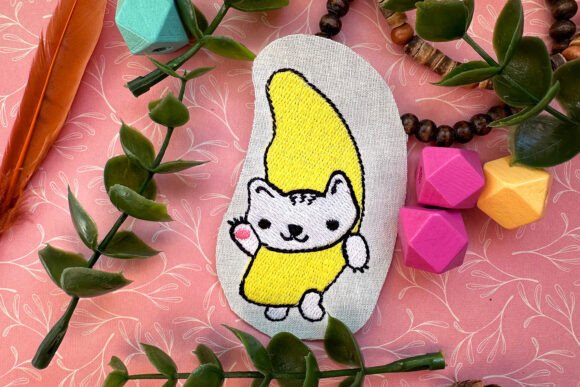
The initial visual impact of the Banana Cat Machine Embroidery is undeniably charming. The concept—a kitten dressed in a ridiculous banana costume—taps into the current trend of humorous, meme-inspired aesthetics that perform exceptionally well on social media and in boutique retail settings. From a design perspective, the layout is balanced. The curvature of the banana provides a natural frame for the cat’s face, which is crucial for maintaining focal point clarity in stitched formats.
However, charm alone does not make a good embroidery file. My primary concern when opening any new design is the complexity of the shapes. Curved elements, like the ends of a banana, can be tricky to stitch without puckering if the stitch density is too high or the underlay is insufficient. Upon closer inspection of the mockups, the design appears to utilize a smart combination of satin stitch for the outlines and borders, and fill stitch for the larger color blocks of the banana peel and the cat’s fur. This hybrid approach is essential for keeping the design flexible enough for various fabrics while maintaining crisp edges.
Real-World Application: Where This Design Shines
To truly test the versatility of the Banana Cat Machine Embroidery, I considered several common production scenarios. This design is not a one-trick pony; it has significant potential across multiple product categories.
- Custom Apparel and Sweatshirts: This is perhaps the strongest use case. The playful nature of the design pairs perfectly with casual wear. Imagine this stitched onto the left chest of a heather grey crewneck or as a larger centerpiece on the back of a hoodie. The contrast between the bright yellow of the banana and neutral fabric tones creates immediate visual appeal.
- Tote Bag Design: For eco-conscious shoppers, a canvas tote featuring this quirky cat is a strong seller. Canvas is a stable fabric that handles fill stitch areas well, allowing the details of the cat’s expression to remain clear without sinking into the weave.
- Embroidered Patch Creation: If you are running a small shop product line, converting this into an iron-on or sew-on patch is a brilliant move. Patches allow customers to add personality to jackets, backpacks, and hats without committing to permanent embroidery on delicate garments.
- Baby Embroidery and Nursery Decor: While the humor might be more appreciated by adults, the soft colors and cute subject matter make it suitable for baby onesies or nursery wall art. However, care must be taken with thread choices to ensure they are soft and non-irritating for sensitive skin.
Technical Considerations and Fabric Compatibility
While the design is robust, it is not immune to the physical limitations of embroidery machines and fabrics. Here is where practical experience matters most. If you are an Etsy seller or a craft business owner, you must consider the substrate.
Fabric texture plays a massive role in the outcome. On high-pile fleece or thick terry cloth, the smaller details of the cat’s face might get lost unless you use a topping stabilizer. Conversely, on thin, stretchy fabrics like lightweight jersey t-shirts, the stitch density becomes a critical factor. If the design is too dense, it will cause the fabric to pucker and distort. I recommend testing the Banana Cat Machine Embroidery on a scrap piece of your intended fabric with a cut-away stabilizer to ensure stability.
Dark fabrics present another challenge. If you are stitching this on a black sweatshirt, you cannot rely on the white of the fabric to show through gaps. You must ensure your thread colors are opaque and vibrant. A bright yellow satin stitch border will pop against dark backgrounds, but you may need to adjust the brightness of the thread shades in your machine settings to prevent the design from looking muddy.
Navigating Small Hoop Sizes and Curved Surfaces
One specific area requiring caution is the use of this design on curved surfaces, such as caps or hats. The banana shape is inherently curved, which can work in your favor on a structured cap front, but only if the hoop size allows for proper placement. If you are using a smaller hoop, ensure that the design fits comfortably within the boundaries without encroaching on the seam allowances. Additionally, tiny details can sometimes break or become indistinct on curved surfaces due to the tension changes during stitching. Always run a test stitch-out on a similar cap material before committing to a customer order.
Enhancing Brand Value and Customer Trust
For commercial embroidery projects, the quality of your design assets directly impacts your brand consistency. Using a well-digitized file like the Banana Cat Machine Embroidery signals professionalism. When customers receive a personalized gift or a handmade product that looks clean, with no loose threads or distorted shapes, their trust in your brand increases. This leads to repeat business and positive reviews.
Furthermore, the "giftable" nature of this design cannot be overstated. Holiday embroidery seasons are driven by unique, conversation-starting designs. This cat fits perfectly into gift guides for cat lovers, humor enthusiasts, and those looking for unique holiday embroidery options that stand out from traditional motifs. It creates an emotional connection, which is the cornerstone of successful small shop product sales.
Practical Designer Notes for Best Results
Before you load this digital embroidery file into your machine for a production run, adhere to these professional guidelines:
- Test on Scrap Fabric: Never skip this step. Verify the tension and registration on the exact fabric type you plan to use.
- Check Thread Color Contrast: Ensure your yellow threads are distinct from any cream or white threads used for the cat. Low contrast can make the design look flat.
- Review Stitch Density: If your machine allows, check the density map. If areas look too solid, consider reducing density slightly to prevent stiffness.
- Confirm Hoop Size: Measure the design dimensions against your available hoops. Do not attempt to resize the design beyond recommended limits, as this distorts stitch length and can cause thread breaks.
- Inspect Small Details: Zoom in on the cat’s eyes and whiskers. Ensure these fine lines are digitized with appropriate running stitch or fine satin techniques that won’t collapse during washing.
- Licensing Verification: Always confirm the license terms provided with the download. Ensure you have the right to use the design for commercial purposes if you are selling finished items or printable mockup previews.
In conclusion, the Banana Cat Machine Embroidery is a strong contender for designers looking to add humor and warmth to their portfolio. It balances aesthetic appeal with technical feasibility, provided the user respects the nuances of fabric choice and stabilization. For the modern maker, it offers a delightful blend of fun and function, ready to bring joy to both the creator and the recipient.